
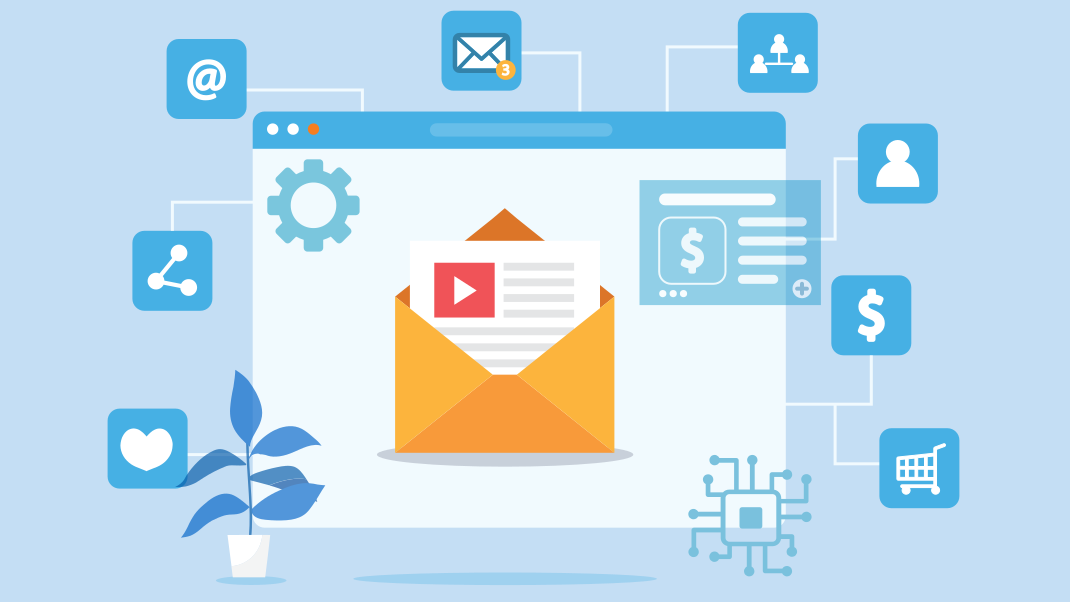
The way businesses communicate with their target consumers is being completely transformed by AI email marketing. Marketers have been using blast emails for years. Blast email solutions make sending bulk emails easy, but generic tactics are rapidly becoming outdated. Today’s consumers expect personalized, timely, and relevant content — and AI makes this possible at scale. By analyzing user behavior, preferences, and engagement patterns, AI-driven tools help marketers craft smarter campaigns that boost open rates, click-throughs, and conversions. As a result, businesses can build stronger relationships with their audiences while optimizing their marketing open rates.
What is AI email marketing?
The term “AI email marketing” describes a wide range of devices, software, and technology that optimize email campaigns by utilizing artificial intelligence. Personalized email marketing is the practice of tailoring emails to each recipient based on their individual information and preferences. Instead of sending your emails to everyone on your list, they are tailored based on customer data like previous purchases, browsing habits, and engagement metrics. To learn from user interactions and behavioral data, it combines machine learning, natural language processing, and data analytics. This allows marketers to automate content creation, subject line testing, optimal send-time predictions, and customer segmentation with remarkable precision. As a result, campaigns become more relevant and timely, leading to higher engagement and stronger customer relationships. Let’s look in more detail at how AI developments are used for marketing materials and targeted emails.
Optimized Segmentation
Artificial intelligence can continuously monitor and optimize segmentation by examining customer behavior and modifying segmentation criteria as necessary. AI email marketing solutions can guarantee that customers receive more pertinent emails and promotional materials if their behavior shifts and they begin expressing interest in various product categories. AI keeps examining consumer behavior over time and modifying segmentation criteria as necessary.
This dynamic approach ensures that email lists remain up to date and aligned with real-time customer interests, rather than relying on outdated or static user data. As a result, marketers can deliver highly targeted messages that increase engagement, reduce unsubscribes, and improve overall campaign effectiveness.
These tools use AI to dynamically segment audiences based on behavior, preferences, and engagement:
- Klaviyo – Known for real-time behavioral segmentation and predictive analytics.
- ActiveCampaign – Offers automated list segmentation based on user actions.
- Ortto – Combines customer data, behavior, and AI to create advanced audience segments.
Make Send Times More Efficient
When your receiver opens their inbox, you want your email to be the first thing they see. If you send it too quickly, it will be buried beneath those of your competitors. By determining when each receiver is most likely to open and interact with emails, AI optimizes email send times. To forecast the best engagement windows involves evaluating trends in user activity over various days and hours.
This send-time optimization not only increases open rates but also helps prevent emails from being ignored or deleted. Some AI tools even allow real-time adjustments based on unexpected behavioral shifts, such as holidays or special events, to maintain timing relevance.
These platforms analyze open-time behavior to schedule emails for when recipients are most likely to engage:
- Mailchimp – Offers AI-powered send-time optimization based on engagement patterns.
- Sendinblue (Brevo) – Provides heatmap analysis and smart send-time features.
- Salesforce Marketing Cloud – Predictive send-time AI based on Einstein AI.
Filtering Spam
Additionally, AI email marketing tools examine emails to identify if they are authentic or spam. By doing this, you may be able to keep your email campaigns out of the spam folder.
Advanced AI filters use reputation scoring, content analysis, and engagement prediction to fine-tune your messages. This ensures better deliverability, maintains sender credibility, and helps emails land in the recipient’s primary inbox rather than promotions or junk folders.
While not always standalone tools, these platforms include strong features to reduce spam risk and improve deliverability:
- Postmark – Focuses on high deliverability and avoiding spam filters.
- Mailgun – Provides analytics and spam complaint handling using AI.
- Litmus – Tests emails across clients and checks for spam triggers and deliverability risks.
Content Generation
AI modifies email content in response to user activities, making messages more contextually relevant. AI customization allows for the creation of aesthetically pleasing emails that are suited to users’ tastes and habits, giving each personalized email feel for the recipient.
This includes everything from product recommendations and personalized images to dynamic text blocks that change based on user behavior. AI can even test different content formats across small segments of an audience and automatically adopt the top-performing version across the entire campaign.
These tools use AI to personalize content and generate text, images, and recommendations in emails:
- Phrasee – AI-generated email copy, including subject lines, body text, and calls-to-action.
- Seventh Sense – Personalizes content timing and messaging using behavioral data.
- Persado – Creates emotional AI-powered language for email content based on psychology and performance data.
Better Subject Lines
The goal of email subject lines is to draw in or compel readers to click. Using natural language processing and historical campaign data, AI can create email subject lines by determining which phrases and calls to action appeal best to certain target segments.
This predictive approach increases open rates and avoids spam triggers. Some platforms also allow A/B testing powered by AI, where subject lines are automatically optimized in real time based on recipient reactions during the campaign rollout.
AI-powered subject line tools test and optimize based on historical performance:
- SubjectLine.com – Uses an AI engine to score and improve subject lines.
- CoSchedule Headline Analyzer – Good for crafting compelling subject lines using language analysis.
- Phrasee – Again, excels here with NLP-generated and optimized subject lines.
Chatbots for Real-Time Support
By offering individualized assistance with rescheduling, cancellations, and addressing frequently asked questions, chatbot integration can enhance customer engagement.
AI-powered chatbots can be embedded within emails or connected through links, allowing recipients to get instant help without visiting a website. This improves user satisfaction, reduces bounce rates, and creates a seamless brand experience from inbox to interaction.
These AI chatbot platforms integrate with email or landing pages linked from emails:
- Drift – Offers personalized, AI-powered chatbots for customer support and sales.
- Tidio – AI chatbots that handle FAQs, order tracking, and booking, and can be linked in emails.
- Intercom – Combines live chat with AI-powered bots and integrates well with marketing workflows.